 how-to
Selling Used Furniture Locally for Cash: A Complete Guide
Table of Contents
- Why Selling Used Furniture Locally for Cash Works
- How to Price Second-Hand Furniture Correctly
- Tips for Photographing Furniture for Sale
- How to Write a Compelling Furniture Listing
- Preparing Your Furniture for Buyer Inspection
- Is Selling Furniture Online Worth the Effort?
- Safety and Security When Meeting Buyers
- Avoiding Scams and Unserious Inquiries
- Frequently Asked Questions
Last Updated: September 23, 2026
Why Selling Used Furniture Locally for Cash Works
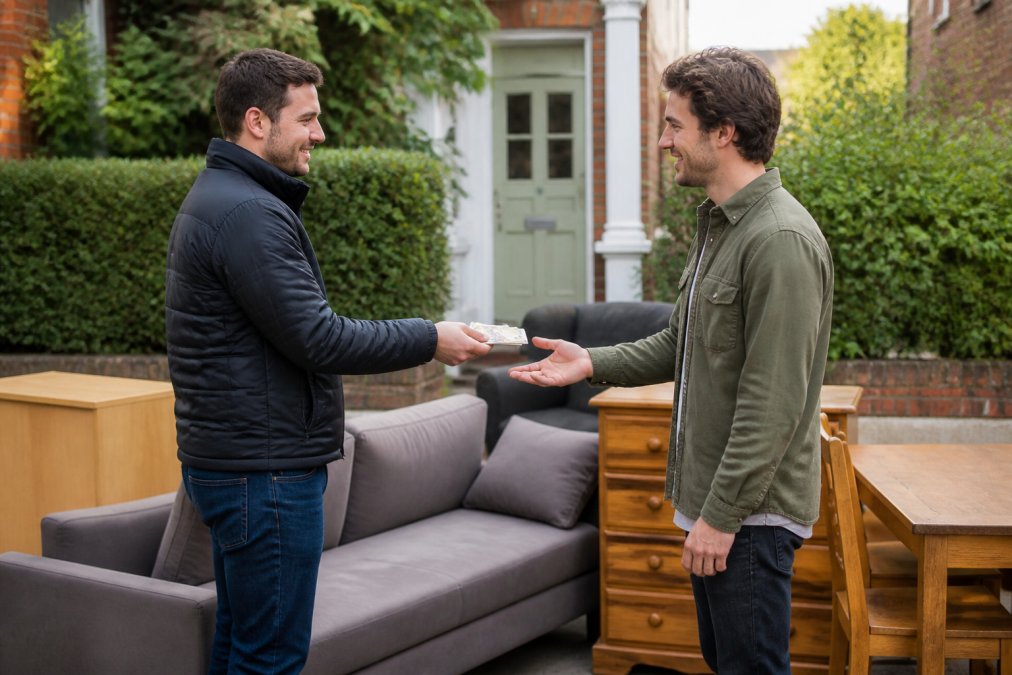
Selling used furniture locally for cash removes middlemen, avoids shipping costs and listing fees, and delivers payment immediately. A buyer sees the item, inspects it, pays on the spot, no disputes over condition, no chargebacks, no waiting.
This approach works best for larger pieces, sofas, beds, dining tables, wardrobes, which are expensive to ship and damage easily in transit. Cash payment completes the transaction immediately: buyer gets furniture, you get paid, deal is done.
How to Price Second-Hand Furniture Correctly
Pricing second-hand furniture requires more than a simple percentage rule. The 40-60% of original retail cost is a starting point, but actual value depends on condition, brand, style demand, and local market saturation.
Build a valuation framework using these steps:
Step 1: Establish the original retail price. Search online using brand name, model, and style, or check your receipt. For vintage or discontinued pieces, search auction sites and specialist dealers for comparable sales prices.
Step 2: Apply condition multipliers. Condition is the primary value driver. Use this scale:
- Excellent (90-100% of baseline): Minimal wear, no stains, no damage, looks nearly new. Suitable for resale as near-new.
- Good (60-80% of baseline): Normal use marks, light scratches, no major damage or stains. Fully functional and presentable.
- Fair (40-60% of baseline): Visible wear, minor stains, small scratches or dents, fully functional. Requires honest disclosure.
- Poor (20-40% of baseline): Significant wear, multiple stains, visible damage, but structurally sound. Suitable for upcyclers or budget buyers.
- Needs restoration (10-30% of baseline): Broken parts, deep stains, structural issues. Priced for DIY restorers only.
Step 3: Adjust for brand and construction quality. Solid wood holds value better than particle board or MDF. Recognised brands (Ercol, G-Plan, Stressless, Vitsoe) command 10-20% premiums. Budget brands (IKEA, Wayfair) depreciate faster, selling at 30-50% of original retail even in excellent condition.
Step 4: Factor in style and trend demand. Mid-century modern, Scandinavian, and industrial styles hold strong resale value. Dated 1990s-2000s styles sell slower and may require 10-20% discounts. Check local marketplace listings to identify oversupplied versus in-demand styles.
Step 5: Research local comparable sales. Search marketplace platforms for identical or similar items. Items listed 30+ days are overpriced; items selling within 7 days are underpriced. Aim for the middle ground.
Practical valuation examples:
- Solid oak dining table, original retail £1,200, good condition, minor scratches: Baseline 60% = £720. No brand premium. Dining tables are in steady demand. Final price: £680-750.
- IKEA Billy bookshelf, original retail £80, excellent condition: Baseline 50% (budget brand) = £40. Oversupplied category. Final price: £25-35.
- Vintage Ercol Windsor chair, original retail unknown, excellent condition: Research comparable Ercol chairs selling for £150-250. Ercol commands strong premiums. Final price: £180-220.
- Leather sofa, original retail £2,500, fair condition with one stain on cushion: Baseline 50% = £1,250. Condition multiplier 50% (fair) = £625. Leather requires professional cleaning (£100-200). Price at £550-600 to account for buyer's cleaning costs.
Use online valuation tools where available. Specialist retailers, auction houses, and charity shops display prices for similar items, giving real-world benchmarks. Underpricing slightly accelerates sales, a sofa at £480 instead of £520 attracts more inquiries and sells faster, reducing storage costs.
Test your price. If you receive no inquiries within 7 days, your price is too high. Drop it by 10-15% and repost. If you receive 10+ inquiries in the first 48 hours, you've underpriced; increase by 5-10% for the next item.
Tips for Photographing Furniture for Sale
Photos make or break furniture sales. Take photos in natural daylight near a window to show true colour and condition.
Photograph from multiple angles: full view, close-ups of damage, detail shots of texture, underside views, and scale shots. Show furniture in context, a dining table as a full setup, a bedroom chair in a bedroom corner, rather than isolated.
Highlight condition honestly. If there's a stain, photograph it clearly. If legs are scratched, show that too. Buyers expect honesty. Surprises when they arrive kill deals.
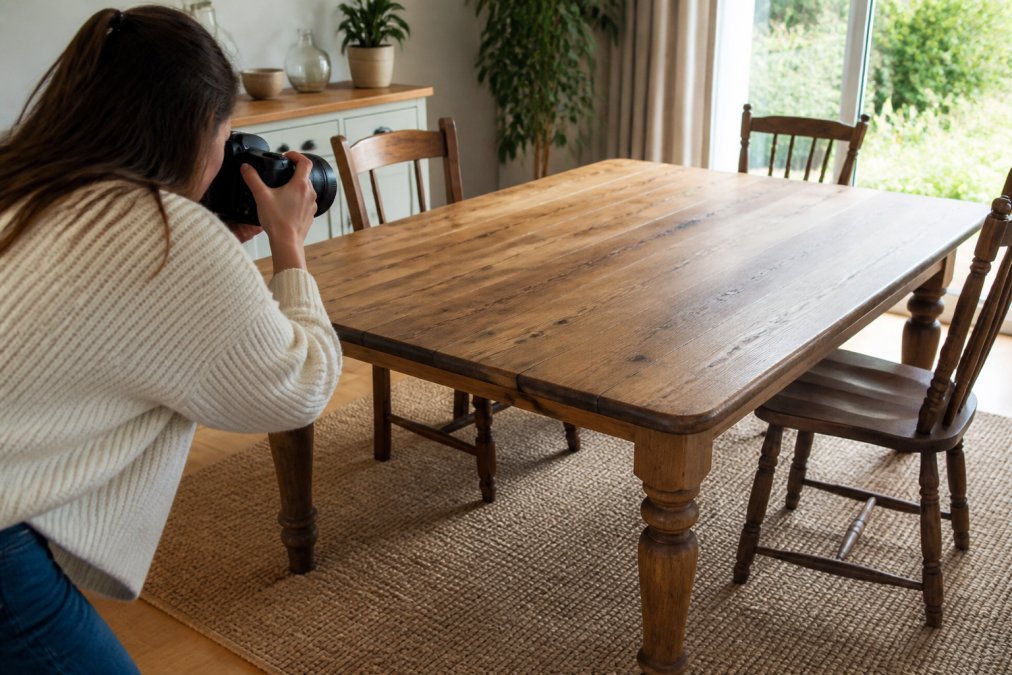
Clean the furniture before shooting. Dust, crumbs, and clutter distract from the piece itself. A clean sofa photographs well. A soiled one looks worse in photos than in person.
Use at least 8-12 photos per item. Multiple angles and details reduce buyer questions. Better photos mean fewer "Is there any damage I can't see?" messages.
How to Write a Compelling Furniture Listing
Start with the most important detail: what the furniture is and its condition. Include: item name and style, dimensions, material, condition rating, any damage, brand, age/era, reason for selling, pickup/delivery options, and asking price.
Be specific about condition: "Excellent" = minimal wear, "Good" = normal use marks, "Fair" = visible wear/stains, "Needs work" = repairs required. Describe what makes the piece valuable ("Solid oak," "Vintage 1970s teak," "IKEA PAX with mirrors"). Write naturally: "This sofa shows normal wear on the arms" sounds real; "Gently used in a smoke-free home" sounds like a sales pitch.
End with clear next steps: "Collection only from [your area]. Cash on pickup. Available weekends after 2pm."
Preparing Your Furniture for Buyer Inspection
Pre-viewing preparation:
Clean thoroughly: vacuum sofas, wipe tables and wood, remove dust from legs and underneath. Test everything that moves, drawers, doors, hinges, shelves. Repair what's easy: tighten screws, glue peeling veneer, replace missing handles. Don't hide damage; acknowledge stains upfront to build trust. Clear the viewing space so buyers can walk around the piece. Be ready to discuss the item's history and maintenance. Have original instructions or packaging ready if relevant.
Managing no-shows and cancellations:
Protect yourself by: confirming 24 hours before viewing (filters uncommitted buyers), requesting a phone number (text reminders reduce no-shows by 30-40%), setting a cancellation window in your listing ("24 hours notice required"), and limiting viewings to two per day.
Troubleshooting items that don't sell:
If no inquiries within 7 days: reprice downward 10-15% (most unsold furniture is overpriced), refresh photos in different lighting, rewrite vague descriptions with specific details ("Solid oak frame, grey linen, 2.2m wide, excellent condition"), highlight unique selling points (designer brand, vintage era, reupholstered), and offer delivery or loading assistance to remove logistics barriers.
When to stop selling and explore alternatives:
Handling difficult buyers during inspection:
Is Selling Furniture Online Worth the Effort?
Online selling reaches more buyers but shipping costs and logistics complicate large furniture sales. Shipping a sofa costs £80-150, cutting deeply into profit. Local selling usually wins for large pieces; online works for small items like side tables or bookshelves. Local cash sales offer simplicity: one or two viewings, quick payment, collection complete, no chargebacks, returns, or shipping disasters.
Safety and Security When Meeting Buyers
Meet in a public space if possible. A busy community centre car park is safer than your home. Some people prefer home viewings for large furniture, but you control the risk.
Avoiding Scams and Unserious Inquiries
Serious buyers ask specific questions about condition and dimensions. Scammers ask vague questions or seem disinterested in details.
Watch for these red flags:
- Buyer wants to pay before viewing
- Buyer offers more than your asking price
- Buyer asks you to ship despite "local only" listing
- Buyer wants to collect but keeps delaying
- Buyer asks you to hold the item indefinitely
- Buyer's messages are generic ("Is this available?") with no follow-up
Frequently Asked Questions
Where is the best place to sell used furniture for cash?
Local collection-only marketplaces work best for selling used furniture quickly because buyers avoid shipping costs and you receive cash on collection. Community platforms like LOSBID connect you with local buyers seeking second-hand items, while house clearance services offer convenience if you're selling multiple pieces. Facebook Marketplace and local classifieds also attract nearby buyers. Choose based on how quickly you need to sell and whether you prefer direct negotiation or a structured platform.
How do I price my used furniture for a quick sale?
Research comparable items on local marketplaces to establish realistic pricing. For vintage or antique pieces, use furniture appraisal guides or specialist valuation services. Typically, second-hand furniture sells for 30-50% of its original retail price, depending on condition, age, and demand. Solid wood furniture and designer pieces hold value better than flat-pack items. Price slightly below market to attract serious buyers quickly, but avoid underpricing, test the market with your initial price and adjust within a week if you're not getting interest. Factor in your time and effort when deciding whether a lower price is worth a faster sale.
How can I stay safe when selling items to strangers locally?
Meet buyers in a public location during daylight hours, or arrange collection at your home with a friend present. Use platforms with secure payment systems rather than cash-only deals with unknown individuals. Share your listing details with a trusted contact and let them know when the buyer is arriving. Avoid sharing personal information beyond what's necessary for the transaction. Request payment upfront before handing over the item, and if using cash, count it carefully before the buyer leaves. Trust your instincts, if a buyer seems untrustworthy or pushy about price, it's acceptable to decline the sale.
Do I need to clean or refurbish furniture before selling?
Yes, cleaning significantly improves resale value and attracts serious buyers. Dust, vacuum, and remove stains from upholstery. For solid wood furniture, a gentle polish can restore appearance. You don't need professional restoration, but addressing obvious damage like torn fabric or wobbly legs shows buyers you've cared for the item. Be honest about any damage in your listing description; buyers appreciate transparency and are less likely to dispute condition after purchase. Small repairs (tightening screws, replacing a missing cushion) often pay for themselves through higher selling prices or faster sales.