 how-to
Sell Household Goods for Quick Cash: A Step-by-Step Guide
Table of Contents
- Assess What You Can Sell at Home for Quick Cash
- Where to Sell Unwanted Household Items
- How to Price Second-Hand Items for Maximum Returns
- How to Write a Listing for Second-Hand Goods That Sells
- Speed, Fees, and Payout Timing by Selling Method
- Protect Yourself: Safe Transactions and Scam Prevention
- Decluttering and Prioritising What to Sell First
- Frequently Asked Questions
Last Updated: October 7, 2026
Assess What You Can Sell at Home for Quick Cash
You probably have more sellable items at home than you realise, to sell household goods quick cash is easier than ever, with items hiding in your cupboards, wardrobe, and garage. Walk through your home and spot items you haven't used in months; the fastest sellers are in good condition and solve a real problem.
Electronics and Mobile Devices
Old phones, tablets, and laptops are among the easiest items to sell for quick cash.
Check whether it powers on, if the screen is cracked, and whether the battery holds charge.
Before listing, reset your device to factory settings and remove your personal data, and include the original charger if you have it.
Clothing, Accessories, and Fashion Items
Your wardrobe holds quick cash.
Sort by brand and condition. Higher-end brands attract more buyers, so list items that are clean, undamaged, and in current or classic styles.
Shoes, bags, and belts move quickly too. Include clear photos of any wear, honest descriptions prevent returns and build your reputation.
Jewellery, Collectibles, and Valuables
Jewellery often sells for surprising amounts, gold, silver, and gemstones have inherent value, and even attractive costume jewellery finds buyers.
Collectibles, vintage toys, trading cards, and memorabilia appeal to dedicated collectors.
Watches, especially named brands, attract serious buyers, and vintage or antique items often command premium prices.
Where to Sell Unwanted Household Items
Choosing the right platform changes everything. Platforms attract different buyers, charge different fees, and offer different speed and security, your choice depends on what you're selling and how quickly you need cash.
Online Marketplaces and Selling Platforms
Online marketplaces let you reach buyers nationwide without leaving home. You photograph items, write descriptions, and wait for offers; payment methods and buyer protection vary.
LOSBID offers a community marketplace where you can sell household goods quick cash with free listings and secure transactions.
Other platforms like Facebook Marketplace and Vinted operate similarly with different user bases and fees.
Local Sales and In-Person Transactions
Selling locally cuts postage costs and reaches buyers who prefer to inspect items first. You control the handover and get paid immediately, best for bulky items like furniture and appliances.
Arrange viewings in safe, public spaces like community centres or car parks, during daylight hours with another person present if possible.
Buyback Services and Resale Specialists
Buyback services offer instant cash but pay less than private sales.
Electronics buyback services are most common, assessing devices on brand, model, age, and condition. Payment arrives within days of your item reaching them.
Specialist resale shops buy clothing, shoes, and fashion items. Some focus on designer pieces. Others take high-street brands.
How to Price Second-Hand Items for Maximum Returns
Getting the price right determines whether your item sells quickly or sits unsold. Work from recent sold prices, adjust for condition, and factor in fees and postage.
Getting an Item Valuation
Research comparable items by filtering for sold or completed listings, not active ones, a phone listed at £180 that sold for £120 tells you more than ten optimistic listings.
For jewellery and collectibles, professional valuations cost money but give accuracy, worth it for high-value items. For lower-value pieces, checking hallmark stamps, maker's marks, and recent auction results is usually enough.
Adjusting Price by Item Condition
Condition shapes price dramatically. Damage, dents, cracks, and stains reduce value significantly, so use a consistent grading scale:
- New with tags or sealed, unused, original packaging intact. Expect 70-90% of retail for popular brands.
- Excellent, minimal wear, fully functional, no visible marks. Expect 50-70% of retail.
- Good, light wear, works as intended, minor cosmetic flaws. Expect 30-50% of retail.
As a rough guide, a mid-range smartphone in good condition might sell privately for £80-£150, while a buyback service may offer £50-£90.
Factor in age: older electronics and dated fashion are worth less. Collectibles sometimes appreciate, sometimes depreciate, but condition and completeness (box, charger, manual) often matter more than age.
Fees, Postage, and What You Actually Keep
Your headline sale price is not your take-home amount. Online marketplaces typically charge a final value fee, sometimes with a fixed per-order fee and payment processing on top, and postage and packaging adds £3-£6 for a small parcel and £10 or more for larger items. Local sales avoid fees and postage entirely, so a £60 local sale can beat an £80 online sale once deductions apply, while buyback services quote a single figure with no seller fees, already lower to cover their margin.
Tax and Legal Considerations for Occasional Sellers
Selling your own personal possessions occasionally is generally not treated as trading, and proceeds are usually not taxable income.
However, if you buy items to resell, sell frequently and in volume, or operate like a business, you may be treated as trading and need to register with HMRC. Platforms may report your sales under digital platform reporting rules, so keep records of what you sold, when, and for how much (Reporting rules for digital platforms).
Capital gains may also apply if you sell a personal possession for more than £6,000 and it has increased in value.
Price slightly below market to attract quick sales.
How to Write a Listing for Second-Hand Goods That Sells
Your listing is your salesperson. A vague, poorly photographed listing gets ignored. A clear, detailed listing with honest descriptions sells fast.
Photographing Your Items
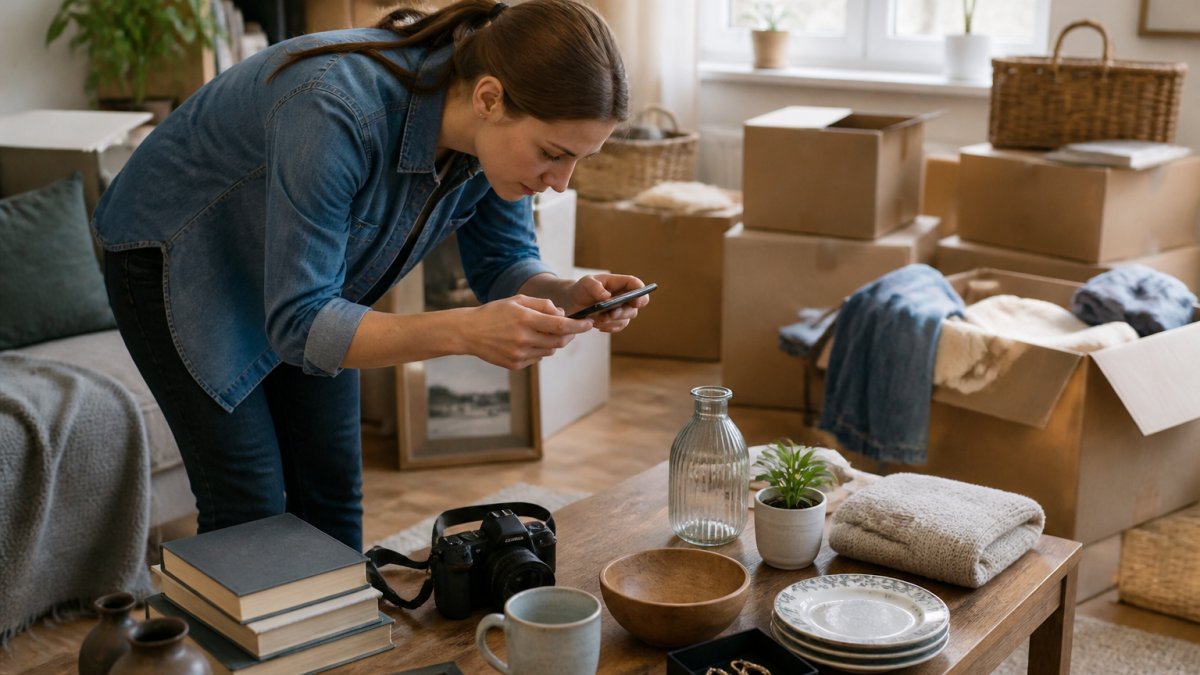
Take photos in natural daylight from multiple angles, front, back, and any damage or wear, since close-ups reveal condition better than distant shots. For clothing, lay items flat, photograph straight-on, and show the label with size and brand plus any stains or damage. For electronics, photograph the screen, buttons, and back, including any damage.
Writing Clear, Honest Descriptions
Start with the item name and key details: brand, model, size, colour, age. Then describe condition honestly, "excellent, barely worn" differs from "good, light wear on edges", and list any defects, since buyers discover them anyway and feel misled if you hide them. Include measurements for furniture and clothing (waist, chest, length, width, depth) so buyers know if items fit their space or body, and explain why you're selling ("downsizing," "no longer needed," "outgrown") because buyers feel more confident buying from someone clearing house than unloading damaged stock.
Speed, Fees, and Payout Timing by Selling Method
Different methods offer different trade-offs: online marketplaces charge fees but reach more buyers, buyback services pay less but instantly, and local sales avoid fees but require coordination. Platform fees typically vary, some charge listing fees, others commission only, so check terms before listing. Payout timing varies: some platforms pay within days, others hold funds for buyer protection (often 14-30 days), and buyback services usually pay within 3-5 working days of receiving your item.
Protect Yourself: Safe Transactions and Scam Prevention
Selling to strangers carries risk: buyers may claim items never arrived, demand refunds, or pose as serious buyers then disappear.
Common Scam Patterns to Recognise
Most marketplace scams follow recognisable scripts:
- Overpayment scams. The buyer sends more than the agreed price, often via a fake payment notification, then asks you to refund the difference. The original payment never clears.
- Fake payment screenshots. The buyer sends a screenshot of a bank transfer that does not exist. Always check your own banking app or account, not a screenshot.
- Courier and collection scams. The buyer says a courier will collect and pay on their behalf, then asks for your address and personal details. Legitimate buyers pay before collection.
Verifying Buyer Seriousness
Check buyer profiles before accepting offers.
Serious buyers ask specific questions about condition, size, or functionality.
Require deposits for high-value items. A small upfront bank transfer before viewing filters out time-wasters.
Be wary of buyers who move the conversation off-platform immediately, scammers push to email, WhatsApp, or text to avoid protections and record-keeping.
Secure Payment Methods
Use payment methods that protect you and leave a record:
- Bank transfers are fast and final, but once sent, funds are difficult to recover. Only accept from buyers you have verified, and confirm the money is in your account before releasing goods.
- Card payments and payment apps offer some buyer and seller protection, but check the terms. Some apps are designed for friends and family and offer no protection for goods and services.
- Cash on collection is final and immediate. It works well for local sales, but be alert to counterfeit notes, especially for high-value items. Meet at a bank or use a note-checking pen if you are unsure.
Never release an item until funds have cleared. For posted items, use tracked and signed-for delivery and keep the receipt and tracking number.
Safe Handover and Collection
Meet in public spaces for local sales, car parks, community centres, or busy streets, during daylight hours, bring a friend or family member, and let someone know where you're going and when you expect to return. Photograph items at handover, including the buyer receiving them in good condition; for furniture, photograph in place before dismantling and again once loaded.
Protecting Your Personal Information
Use a separate email for selling and avoid giving out your full name, home address, or phone number until a sale is agreed.
When posting, use a return address that isn't your home, a workplace or parcel shop, and cover labels showing your address or personal details.
If a buyer becomes aggressive, pressures you, or refuses your payment terms, walk away. Your safety is worth more than a quick sale.
Decluttering and Prioritising What to Sell First
You can't sell everything at once.
Sell electronics first, phones, tablets, and laptops move quickly and hold value well.
Jewellery and collectibles come next, once you've researched and valued them.
Finally, tackle furniture and bulky items, which need coordination for collection or postage.
This sequence generates quick wins early.
Frequently Asked Questions
What can I sell immediately for cash?
Electronics, mobile phones, and tablets typically sell fastest because buyers actively seek them. Clothing from recognised brands, jewellery, and collectibles also move quickly if priced competitively. Furniture and bulky household goods take longer unless you offer collection. Check your home for items in good condition that others actively search for, these convert to cash faster than niche or damaged goods.
How should I price second-hand household goods for a quick sale?
Research similar items on selling platforms to understand market rates, then adjust downward by 20-30% based on condition to encourage faster sales. Items in excellent condition command higher prices; those with minor wear sell faster at lower prices. Get a free valuation from buyback services if available. Remember that speed trades off against maximum price, slightly lower pricing generates more interest and quicker cash returns.
What is the safest way to sell household items to someone locally?
Use a platform with buyer protection and secure payment options rather than cash-only deals. Meet in public spaces during daylight, bring a trusted friend, and confirm payment before handing over items. For high-value goods, use tracked payment methods that offer dispute resolution. Avoid sharing your home address until you've verified the buyer is genuine and committed to purchasing.
Where can I sell my stuff and get paid quickly?
Online marketplaces and community platforms offer faster payment than in-person sales, with funds arriving within days. Buyback services for electronics and mobiles often provide instant or next-day payouts. Local collection-only sales skip postage delays but require immediate cash handover. The fastest option depends on your item type, electronics buyback is quickest for tech, while online platforms work well for general household goods when you price competitively.
Selling household goods for quick cash doesn't have to be complicated. Start with what you know works, electronics, clothing, and jewellery, photograph them honestly, and list on platforms where your buyers gather. LOSBID connects you with real people who value community trust and secure transactions, offering free listings and flexible selling options through immediate purchase or live auctions. Get started today and turn items you no longer need into the cash you do.