 how-to
Tips for Selling Items Locally: A Practical Guide
Table of Contents
- Choose the Right Platform for Selling Items Locally
- How to Write a Listing for Local Sales That Attracts Buyers
- How to Price Second-Hand Items Competitively
- Take High-Quality Photos and Document Item Condition
- Safety Tips for Meeting Local Buyers
- Handle Negotiations and Avoid Common Scams
- Prepare Items for Collection and Close the Sale
- Frequently Asked Questions
Last Updated: October 2, 2026
Choose the Right Platform for Selling Items Locally
The best platform for selling items locally depends on what you're selling and your preferred selling model. Choosing the wrong one wastes your effort.
LOSBID is a community marketplace offering both "Buy Now" options with buyer protection and live auction bidding. Selling is free, so you keep more of your earnings.
When choosing where to list, consider these factors:
- Audience type: Are you selling collectibles, furniture, electronics, or fashion? Different platforms attract different buyers.
- Selling model: Do you want a fixed price, or are you open to haggling and negotiation?
- Fees: Some platforms take a cut of every sale. Others charge nothing to list.
- Time commitment: Auctions require you to be present. Fixed-price listings work while you sleep.
- Safety features: Does the platform offer buyer protection or secure payment methods?
A platform with no listing fees and buyer protection simplifies the process and protects your profit.
How to Write a Listing for Local Sales That Attracts Buyers
A strong product description is the difference between a listing that sits unsold and one that moves fast.
Your listing must answer: What is it? What condition is it in? Why are you selling it? Can I trust you?
Start with a clear, honest headline. Don't be vague. "Vintage leather sofa" beats "furniture." "iPhone 12 Pro, mint condition" beats "phone."
In the description, lead with what makes the item worth buying:
- What it is: Brand, model, size, colour
- Condition: Be brutally honest. Describe wear, scratches, stains, or damage. Buyers spot lies immediately.
- Why you're selling: "Downsizing," "Upgrading," "No longer needed" all build trust
- What's included: Original box? Cables? Manuals? List everything that comes with it.
- Local pickup details: Where and when can buyers collect? Do you need 24 hours notice?
Avoid vague descriptions, photos that hide flaws, inflated prices, and asking for payment before collection.
Keep your tone friendly and direct. You're talking to a neighbour, not a corporation. This builds the trust that turns browsers into buyers.
How to Price Second-Hand Items Competitively
Price to sell quickly while making a fair return. A quick sale beats holding inventory for months.
Research what similar items actually sell for on completed sales, not current listings. Many items sit unsold because they're overpriced.
Then adjust for condition:
- Like new or unused: 60-75% of retail price
- Good condition (minor wear): 40-60% of retail price
- Fair condition (visible wear): 25-40% of retail price
- Poor condition (significant damage): 10-25% of retail price
Factor in demand (electronics and furniture move faster), seasonality, rarity, and bundle potential.
Price slightly below market rate if you want a quick sale. Buyers notice. A sofa priced at £180 when similar ones list at £200 gets inquiries fast.
For collectibles and high-value items, consider starting with an auction.
Take High-Quality Photos and Document Item Condition
Photos are everything. Most buyers decide in seconds whether to click your listing. Poor photos kill that decision immediately.
Here's what works:
- Use natural light: Photograph during daytime near a window. Avoid harsh shadows and artificial indoor lighting.
- Show the whole item: Take wide shots so buyers see the full context. Then zoom in on details.
- Capture flaws: If there's a scratch, stain, or dent, photograph it. Honesty builds trust and prevents disputes.
- Include size reference: Put a coin, ruler, or your hand in the shot so buyers understand scale.
- Multiple angles: Show the front, back, sides, and any important details from different angles.
- Clean before shooting: Wipe dust, dirt, and fingerprints. A clean item photographs better and looks more valuable.
For electronics, photograph:
- The item powered on (if safe) to prove it works
- Any cables, chargers, or accessories included
- The serial number or model badge
- The condition of buttons, screens, and ports
For furniture and large items, photograph:
- The full piece from multiple angles
- Close-ups of any damage, stains, or wear
- Details like fabric texture, wood grain, or upholstery condition
Safety Tips for Meeting Local Buyers
Most transactions go smoothly, but you need a safety plan. For small items, meet in public. For large furniture, home visits are common but require specific precautions.
Meeting in Public (Recommended for Most Items)
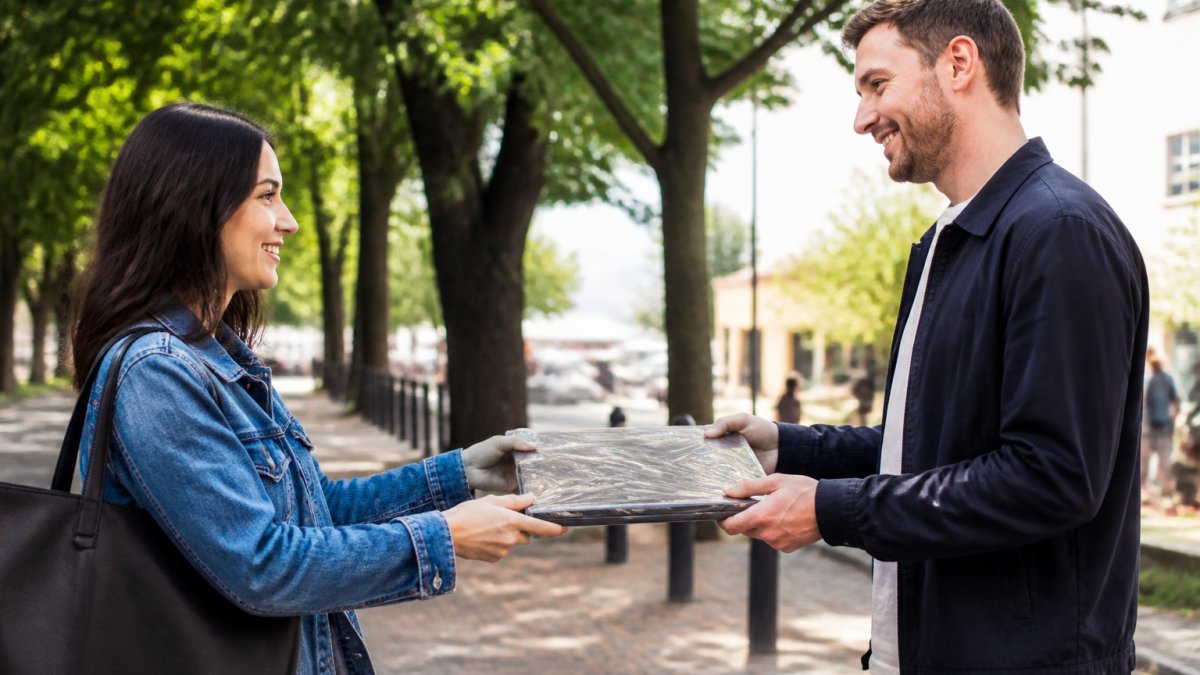
Meet in public during daylight hours. Never invite buyers to your home for small or medium items.
Follow these safety precautions:
- Meet in daylight: Morning or early afternoon is safer than evening
- Choose a public place: Car park, shopping centre, busy street, or community space
- Bring someone with you: A friend or family member adds safety and acts as a witness
- Tell someone where you're going: Text a trusted person the location and time, including the buyer's contact details
- Trust your instincts: If something feels off, cancel. There will be other buyers.
- Inspect payment carefully: Check notes for counterfeits. Ask for bank transfer if you're uncomfortable with cash.
- Keep your phone charged: You need it to contact help if needed
- Don't share your home address: Use a neutral meeting point instead
- Verify the buyer: Ask questions before meeting. Serious buyers answer questions. Scammers often don't.
Allowing Home Visits for Large Items
For sofas, wardrobes, dining tables, and other large furniture, buyers often need to see the item in situ to assess fit and condition. Home visits are common, but they require a different safety protocol.
Common Scams to Watch For
To avoid scams:
- Require payment before handing over the item
- Accept cash or bank transfer only (both are verifiable)
- Document everything in writing via the platform's messaging
- Take photos of the item before and after collection
- Never agree to hold items without a deposit
- Keep records of all communication for at least 30 days
Handle Negotiations and Avoid Common Scams
When haggling comes up, stay calm and friendly:
- Know your bottom price: Decide in advance the lowest you'll accept. Stick to it.
- Be willing to move slightly: A £5 reduction on a £100 item often closes the deal
- Offer value instead of discounts: "I'll throw in the original box" beats "I'll drop the price"
- Use scarcity: "I have another buyer interested" creates urgency (only say this if it's true)
- Walk away if needed: If you can't agree, there's another buyer coming
Common scams in local selling:
Fake payment promises: A buyer agrees to your price but then claims they can only pay next week or via an unusual method. They collect the item anyway. Always get payment before handing over the item.
To avoid scams:
- Require payment before handing over the item
- Accept cash or bank transfer only (both are verifiable)
- Document everything in writing via the platform's messaging
- Take photos of the item before and after collection
- Never agree to hold items without a deposit
Prepare Items for Collection and Close the Sale
The final step is making sure the transaction goes smoothly when the buyer arrives.
Before the buyer arrives:
- Clean the item thoroughly: Dust, wipe, and polish. It should look as good as it did in photos.
- Test it works: For electronics, turn it on and confirm all features function
- Gather all parts: If the listing included cables, chargers, manuals, or original packaging, have them ready
- Prepare packaging: Use bubble wrap, boxes, or bags to protect the item during transport
- Have a receipt or proof of sale ready: A simple written note with the item description, price, date, and both signatures protects you both
When the buyer arrives:
- Greet them warmly: First impressions matter
- Let them inspect the item: Don't rush. Answer their questions honestly.
- Confirm the price: Make sure you both agree on the final amount (after any negotiation)
- Exchange payment: Take payment before handing over the item. Count cash carefully or confirm the bank transfer has gone through.
- Hand over everything: Give them all parts, packaging, and documentation
- Take a final photo: A quick photo of the completed transaction protects you if disputes arise later
After they leave:
- Leave positive feedback: If the transaction went well, say so on the platform. This builds your reputation for future sales.
- Save records: Keep screenshots of messages, photos, and payment confirmation for at least 30 days
- Report problems immediately: If the buyer claims the item is damaged or missing parts, respond quickly with evidence
Frequently Asked Questions
Do I need to pay tax on money made from selling personal items?
If you're selling your own unwanted household goods occasionally, you're generally not liable for income tax. However, if you're selling items regularly or as a business, you may need to declare income to HMRC. The distinction depends on whether you're trading or simply decluttering. For clarity on your specific situation, contact HMRC or consult a tax adviser, especially if you're selling collectibles or electronics in volume.
What items sell best on local marketplaces?
Electronics, furniture, appliances, fashion items, and collectibles typically sell well locally because buyers prefer to inspect them before purchase. Items in good condition with clear photographic evidence attract more interest. Avoid listing damaged goods or items requiring repair unless priced accordingly. Niche collectibles often find their right audience on community platforms where enthusiasts actively search for specific items.
How can I stay safe when meeting buyers for local sales?
Always meet in a public place during daylight hours, bring a trusted friend or family member, and tell someone where you're going. Inspect payment methods carefully before handing over the item, request bank transfer or cash on collection rather than payment apps that can be reversed. Trust your instincts; if something feels wrong, cancel the transaction. Never invite strangers into your home unless absolutely necessary, and consider using a neutral meeting point like a car park or community centre.
What's the best way to handle haggling without losing money on the sale?
Set your asking price with a small buffer to account for negotiation. Know your item's resale value and set a firm minimum price you won't go below. When a buyer haggles, explain your pricing by referencing the item's condition and market value. Be willing to negotiate on smaller amounts (5-10%) but stand firm on major reductions. Remember that quick sales sometimes justify accepting lower offers, especially when decluttering or downsizing.
Selling items locally doesn't have to be stressful. With the right platform, honest listings, and smart safety practices, you'll move unwanted items quickly and keep more of the money. LOSBID makes this process simpler with free selling, buyer protection, and a community of real people looking for genuine deals. Start with one item, build your reputation through positive feedback, and watch your selling confidence grow.